Treasure Island
Treasure Island is the fictional island that gives Robert Louis Stevenson's novel its name and serves as the ultimate destination of the treasure-hunting expedition. It is the place where the mutineers and the loyal party clash, where the treasure map leads, and where the story's central adventures unfold. The island is depicted as a remote, largely uninhabited land with a complex geography that includes hills, swamps, forests, and hidden anchorages, all of which play a crucial role in the narrative's action and atmosphere.
Geography and Appearance
The island is described as being about nine miles long and five across, shaped like a fat dragon standing up, with two fine land-locked harbours and a central hill marked on the map as the Spy-glass. The Spy-glass, which is by three or four hundred feet the tallest hill on the island, runs up sheer from almost every side and is suddenly cut off at the top like a pedestal for a statue. The island's eastern coast is low and covered with grey-coloured woods, broken by streaks of yellow sand and tall pine trees. The hills rise in spires of naked rock, and the general colouring is uniform and sad. The island is surrounded by a strong current that runs along the south and then northward up the west coast, as noted by Long John Silver. The sea around the island is never quiet, with great rollers thundering along the external coast day and night, so that there is scarcely a spot on the island where a man would be out of earshot of their noise.
The Anchorage and Surroundings
The main anchorage, known as Captain Kidd's Anchorage, is located on the south side of the island, behind Skeleton Island, a small islet that gives the anchorage its name. The anchorage is entirely land-locked, buried in woods, with trees coming right down to high-water mark. Two little rivers, or rather swamps, empty into this pond, and the foliage around that part of the shore has a kind of poisonous brightness. The air is filled with a peculiar stagnant smell of sodden leaves and rotting tree trunks, which leads Dr. Livesey to stake his wig that there is fever there. The island also features North Inlet, a narrow, shoal estuary on the north coast, which becomes the final refuge for the Hispaniola after Jim Hawkins cuts her adrift. The island's interior includes a plateau, a two-pointed hill, and various other landmarks such as Haulbowline Head, Mizzen-mast Hill, and Cape of the Woods.
The Stockade and the Log-house
On the island, there is an old stockade, built years ago by the pirate Captain Flint, which becomes the stronghold of the loyal party. The stockade encloses a spring of clear water that rises almost at the top of a knoll, and within it stands a stout log-house fit to hold two score of people, loopholed for musketry on either side. The log-house is made of unsquared trunks of pine, with a porch at the door and a great ship's kettle sunk in the sand as a basin for the spring. The stockade is surrounded by a clearing, but the wood flourishes high and dense close around it, too close for defence. The loyal party, led by Captain Smollett, fortifies this position and defends it against the mutineers' attack, flying the British colours from the roof.
The Treasure and Its Hiding Place
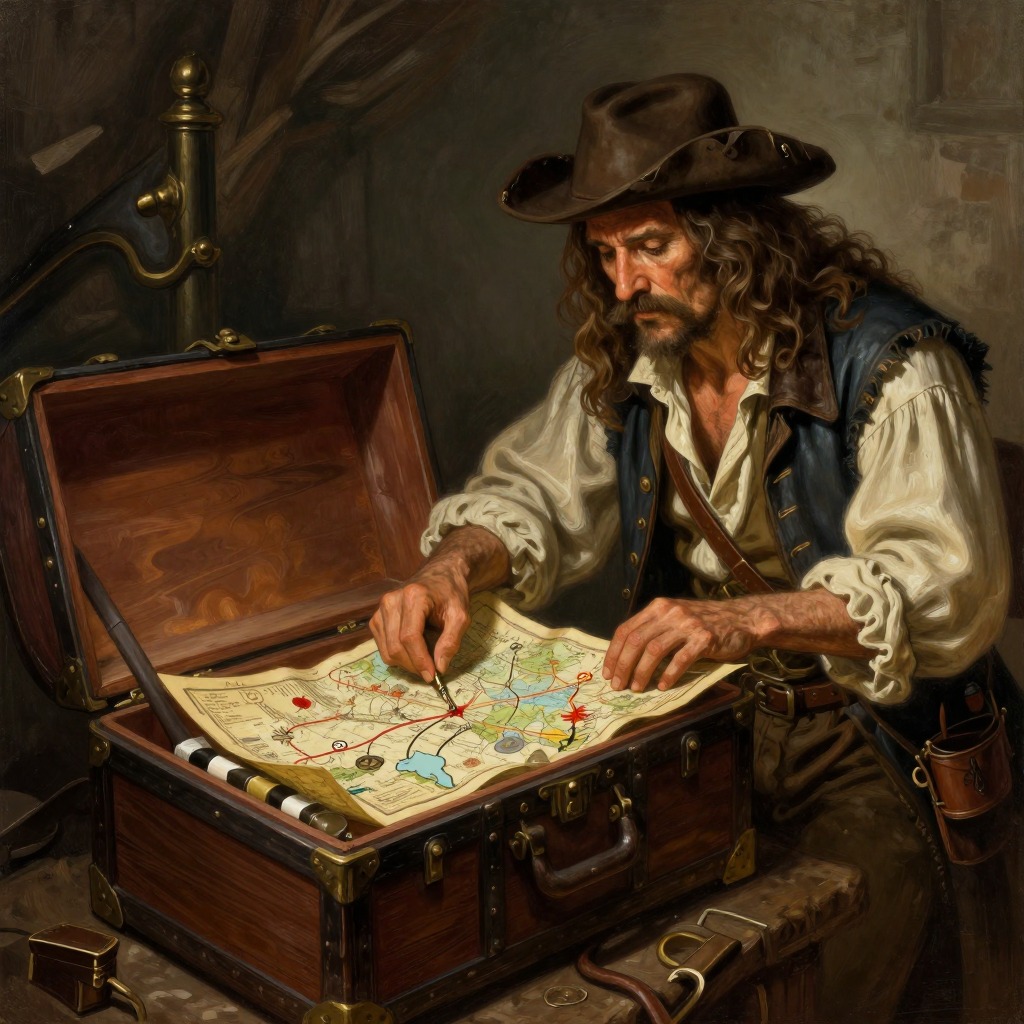
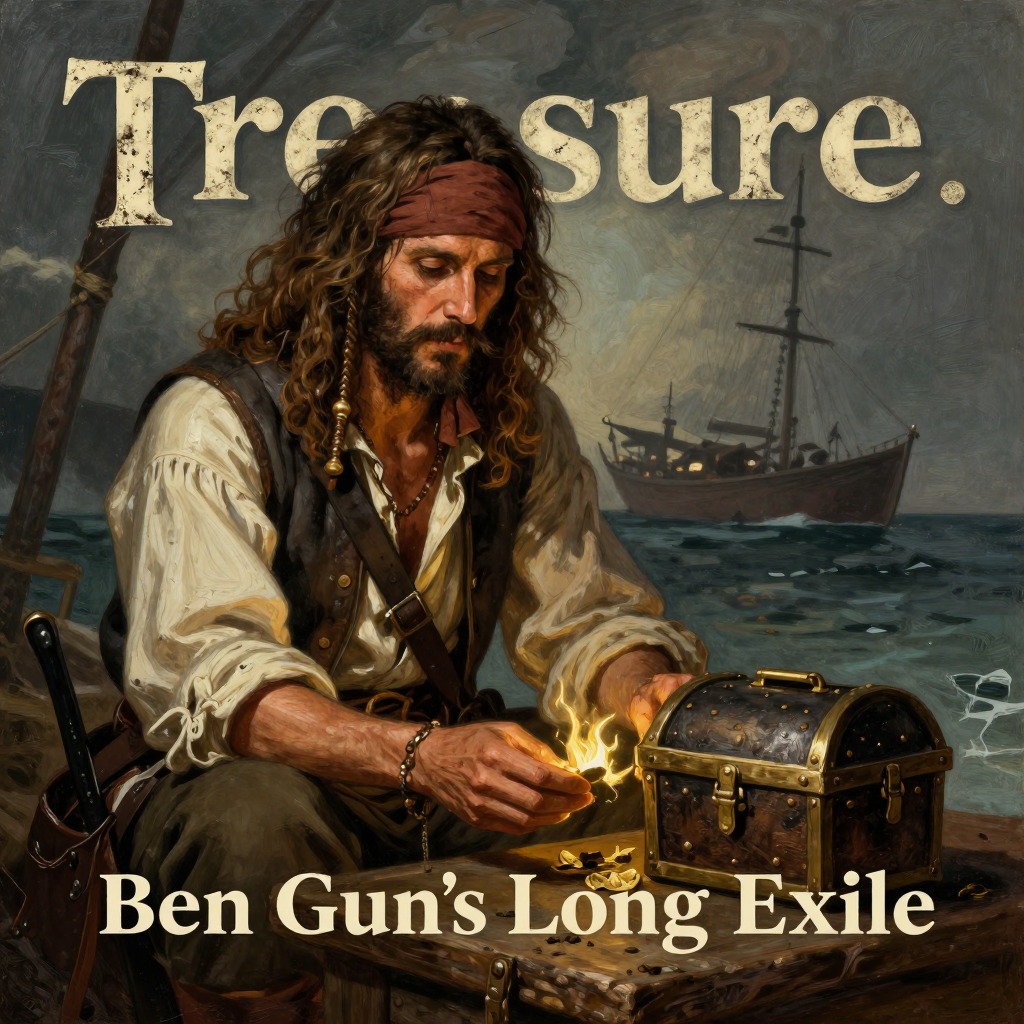
The island is the site of Flint's buried treasure, which is the object of the entire voyage. The treasure map, found in Billy Bones's sea-chest, indicates the location with three red crosses, one in the southwest marked "Bulk of treasure here." The treasure consists of bar silver, arms, and a vast quantity of coined money, including English, French, Spanish, Portuguese, and Oriental pieces. The treasure is eventually found by Ben Gunn, who had been marooned on the island for three years and had discovered the treasure after long searching. He moved it from the original hiding place to a cave on the two-pointed hill at the north-east angle of the island, where it is stored in safety. The treasure hunt itself is a central episode, culminating in the discovery of the rifled cache and the ambush of the mutineers.
The Island's Role in the Story
The island is not merely a backdrop but an active force in the narrative. Its geography shapes the action: the anchorage provides a hiding place for the ship, the stockade offers a defensible position, and the interior's swamps and hills create opportunities for ambush and concealment. The island's atmosphere of decay and fever contributes to the sense of danger and mortality. The island is also a place of transformation for Jim Hawkins, who undergoes his sea adventure there, from overhearing the mutiny plot in the apple barrel to cutting the Hispaniola adrift and dueling with Israel Hands. The island's isolation and wildness amplify the themes of adventure, greed, and survival, and its eventual abandonment by the survivors marks the end of their ordeal. The island remains a haunting memory, as Jim Hawkins later reflects that the worst dreams he has are when he hears the surf booming about its coasts or the sharp voice of Captain Flint the parrot ringing in his ears.